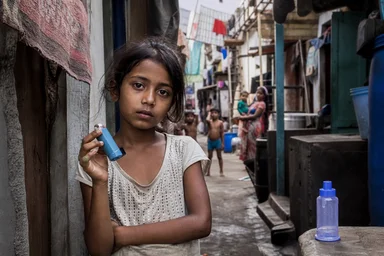
Every morning, Abdul Rahman, a 52-year-old rickshaw puller in Dhaka, faces a choice that no one should have to make: take two puffs of his salbutamol inhaler or buy rice for his children. He chooses rice. By halving his inhaler use from four puffs to two per day, he saves roughly 30 taka — enough for a small meal. His doctor calls it 'rationing his own breath.' Rahman knows it is dangerous, but as he puts it, 'My children are hungry.'
A Daily Trade-Off: Inhaler Puffs for Rice
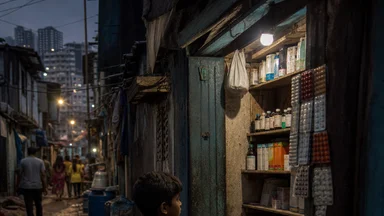
Rahman was diagnosed with COPD three years ago at a free clinic run by an NGO in the Kamrangirchar slum. His symptoms — chronic cough, wheezing, and shortness of breath — are typical of the disease, but his management strategy is not. He buys a generic salbutamol inhaler for about 120 taka, which lasts roughly 15 days if used as prescribed. That works out to around 240 taka per month, nearly half a day's wage for a puller who earns 400–500 taka on a good day.
To stretch his limited income, Rahman began skipping doses. 'I used to take two puffs in the morning and two at night. Now I take one in the morning and one only if I feel very bad,' he says. He saves 30 taka per day on inhaler costs, which he uses to buy rice and vegetables for his wife and two children. 'I know it's dangerous, but my children are hungry,' he repeats.
His doctor, Dr. Fatima Begum, who runs a small respiratory clinic in Old Dhaka, has seen many patients like Rahman. 'He is rationing his own breath,' she says. 'Every time a patient cuts their inhaler dose, their lung function declines, and their risk of exacerbation increases. But they feel they have no other choice.'
The consequences are predictable. Rahman now wakes up breathless at least three nights a week. He uses his inhaler more on days when the air is thick with exhaust, but those are also the days he earns more because more people hire rickshaws. 'It's a cruel irony,' Dr. Begum notes. 'The very work that makes him sick is the only way he can feed his family.'
Occupational Lung Disease in Dhaka's Streets
Rahman is not alone. An estimated 3 million rickshaw pullers work in Bangladesh, the vast majority in Dhaka. They spend 8 to 12 hours daily on congested streets, inhaling a toxic mix of diesel exhaust, dust, and particulate matter. A 2023 study by the International Centre for Diarrhoeal Disease Research, Bangladesh (icddr,b) found that COPD prevalence among pullers is around 15%, compared to roughly 8% in the general adult population. The study, which surveyed 1,200 pullers across six districts, confirmed a strong link between years of pulling and declining lung function.
Traffic-related air pollution is the main driver. Dhaka routinely ranks among the most polluted cities in the world, with PM2.5 levels often exceeding 200 micrograms per cubic meter — 20 times the WHO guideline. For pullers, who work at street level, exposure is continuous. 'It's like smoking a pack of cigarettes a day,' says Dr. Begum, 'except you can't quit your job.'
Most pullers are migrant workers from rural areas who cannot afford to switch occupations. They typically earn 400–500 taka daily, of which 30–40% goes toward renting the rickshaw. After food and housing, little remains for healthcare. A 2022 survey by BRAC found that 60% of pullers with respiratory symptoms had never seen a doctor for their condition.
The icddr,b study also highlighted that many pullers attribute their cough to 'normal' exertion or aging. 'They don't see it as a disease,' explains Dr. Begum. 'They think it's part of the job. By the time they come to clinic, their lung function is already severely compromised.'
The Cost of Breathing: Inhaler Prices vs Wages
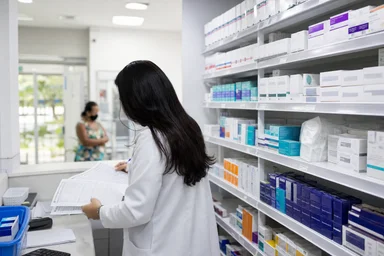
A generic salbutamol inhaler costs around 120 taka in Dhaka pharmacies. At two puffs per day, one inhaler lasts about 30 days, but for patients who need four puffs daily — the minimum for moderate COPD — it lasts only 15 days. That means a monthly cost of 240 taka for salbutamol alone. For a puller earning 500 taka per day, that's about 15% of his monthly income — far beyond the 5% threshold that the World Health Organization considers catastrophic health spending.
Corticosteroid inhalers, which are more effective for COPD, are out of reach for most. They cost upwards of 400 taka each, and many pullers cannot afford them at all. 'I prescribe beclomethasone to my patients, but maybe one in ten can actually buy it,' says Dr. Begum. 'The rest stick with salbutamol because it's cheaper.'
Government and NGO programs provide free inhalers to some patients, but coverage is limited. A 2024 assessment by the Ministry of Health estimated that less than 5% of COPD patients in Bangladesh receive free inhalers through public facilities. The rest must pay out of pocket. 'The free inhaler program is a drop in the ocean,' Dr. Begum says. 'It covers maybe 20 patients per clinic per month.'
In addition, inhalers in Bangladesh are subject to a 15% value-added tax (VAT), classifying them as 'luxury items' alongside cosmetics and electronics. Health advocates have long called for the removal of this tax, arguing that essential medicines should be exempt. 'A 15% VAT on an inhaler is a tax on breathing,' says Dr. Begum. 'It's unconscionable.'
How Halving Inhaler Use Affects Lung Function
Halving inhaler use has measurable consequences. A small study published in 2022 by researchers at the Bangladesh Institute of Health Sciences followed 30 COPD patients who reduced their salbutamol use from four puffs to two puffs per day for three months. Their forced expiratory volume in one second (FEV1) dropped by an average of 12%, a decline that would normally take a year or more in well-treated patients. The risk of exacerbation — a sudden worsening of symptoms requiring emergency care — doubled (odds ratio 2.1, 95% confidence interval 1.3–3.4).
Emergency department visits for COPD also increased. A retrospective analysis of admissions at Dhaka Medical College Hospital found that during the dry season, when air pollution peaks, emergency visits for COPD exacerbation rose by 40% compared to the rainy season. Many of those patients reported cutting their inhaler doses to save money.
Rahman's own experience mirrors these findings. 'I used to be able to pull for six hours without stopping. Now I have to rest every two hours,' he says. He has been to the emergency room twice in the past year, each time costing him 500 taka for transport and medicines. 'That's a full day's earnings gone,' he says. 'And the doctors just tell me to use my inhaler more.'
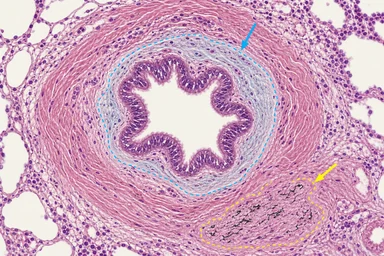
Dr. Begum points out that the decline in lung function is often irreversible. 'Every exacerbation causes permanent damage. Over time, the lungs lose elasticity, and the patient becomes more disabled. It's a downward spiral that could be prevented with consistent medication.'
Systemic Barriers to Affordable Respiratory Care
Bangladesh's health system faces deep structural challenges. The country spends roughly 2.5% of its GDP on health, according to WHO data for 2022, far below the 5% recommended for low-income countries. Out-of-pocket payments account for about 70% of health spending, one of the highest rates in South Asia. There is no universal health coverage for chronic lung disease; patients must pay for consultations, medicines, and tests themselves.
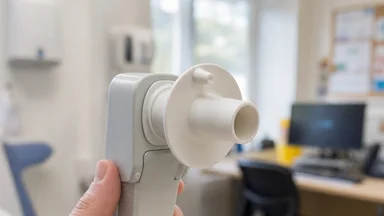
The shortage of specialists is acute. As of 2024, there was roughly one pulmonologist per 500,000 people in rural areas, and most were concentrated in Dhaka and other major cities. Primary care doctors — who are more widely available — often lack spirometers and training to diagnose COPD. A 2023 survey of 200 community health workers in rural Bangladesh found that fewer than 10% could correctly identify the symptoms of COPD.
NGO clinics, such as those run by BRAC and the Diabetic Association of Bangladesh, provide discounted inhalers and basic respiratory care, but they serve only a fraction of the population. 'We see about 50 COPD patients per week at our clinic in Kamrangirchar,' says Dr. Begum. 'But there are hundreds more who never come because they can't afford the bus fare or the time off work.'
Another barrier is the lack of awareness. Many pullers self-medicate with over-the-counter cough syrups or antibiotics, which are ineffective for COPD. 'They come to me after spending 300 taka on medicines that don't work,' Dr. Begum says. 'If they had spent that money on an inhaler, they would be much better off.'
What Could Change: Low-Cost Interventions
Several low-cost interventions could dramatically improve access to respiratory care for rickshaw pullers. The most straightforward is removing the 15% VAT on inhalers, which would save patients roughly 18 taka per inhaler. Health economists estimate that this single policy change could reduce out-of-pocket costs for COPD patients by 10–15%.
Training community health workers to diagnose and manage COPD is another promising approach. A pilot program in the Narayanganj district, run by BRAC, trained 50 community health workers to perform basic spirometry and prescribe salbutamol under supervision. After one year, the program reached over 2,000 patients, and 70% reported better symptom control. The cost per patient was roughly 200 taka, including the cost of the inhaler.
Spacer devices, which improve drug delivery from inhalers and reduce waste, cost about 50 taka each. A 2021 study found that using a spacer reduced the number of puffs needed to achieve the same effect by 30%. Distributing spacers through cooperatives or clinics could help patients stretch their inhalers further.
Telemedicine is also gaining traction. A pilot by BRAC's health program allowed COPD patients in rural areas to consult with a pulmonologist via video call for follow-up visits, reducing travel costs and time. Early results showed a 20% reduction in exacerbation rates among participants.
Rickshaw puller cooperatives, which already exist for savings and insurance, could bulk-buy inhalers at wholesale prices. 'If 100 pullers pool their money, they can negotiate a 20% discount,' says Dr. Begum. 'That's a simple, community-driven solution that doesn't require government approval.'
None of these interventions are silver bullets. They require funding, political will, and coordination. But they represent achievable steps that could ease the daily trade-off between breathing and eating.
The Human Cost of an Unaffordable Inhaler
Rahman's wife, Ayesha, describes nights when her husband's coughing keeps the whole family awake. 'He coughs all night, but we have no choice,' she says. 'If I ask him to see a doctor, he says the money is for rice.' Rahman's 17-year-old son recently dropped out of school to pull a rickshaw, adding another 200 taka per day to the household income. 'I didn't want him to do this work,' Rahman says. 'But we need the money.'
The family spends roughly 70% of its income on food, 15% on housing and transport, and the remaining 15% on health and other expenses. There is no room for an extra 240 taka per month for inhalers. 'We live hand to mouth,' Ayesha says. 'If he stops pulling for even one day, we don't eat.'
Inhaler rationing is a silent epidemic among Dhaka's rickshaw pullers. A 2023 survey by the icddr,b found that 45% of pullers with COPD reported using their inhaler less often than prescribed. The most common reason was cost. 'It's not that they don't understand the importance of treatment,' Dr. Begum says. 'They understand it perfectly. They just can't afford it.'
Without systemic change, thousands more will face the same trade-off. 'Every day I see patients who are slowly suffocating because they can't pay for medicine,' Dr. Begum says. 'It's a tragedy that is entirely preventable.' For Rahman, the calculation is stark: 'I know that if I keep using less inhaler, I will get worse. But what can I do? My children need to eat.'
Another rickshaw puller, Mohammad Ali, 45, shares a similar story. Diagnosed with COPD two years ago, he now uses his inhaler only when he feels severe breathlessness, skipping doses to save money for his three children's school fees. 'I used to take four puffs a day, but now I take one or two,' he says. 'My youngest daughter is in primary school, and I want her to have a better future. If I have to choose between breathing and her education, I choose her.' Ali's wife works part-time as a maid, earning an additional 150 taka per day, but it is still not enough to cover both inhaler costs and school supplies. He estimates he saves about 15 taka per day by reducing his inhaler use, which he puts toward notebooks and pencils. His doctor has warned him that his lung function is declining, but Ali feels he has no alternative. 'I know it's risky, but what else can I do? My children come first.'
Similarly, 38-year-old rickshaw puller Shahidul Islam, who has been pulling for 15 years, developed COPD five years ago. He used to take a combination inhaler containing salbutamol and beclomethasone, but the cost became prohibitive after he lost his wife to illness and became the sole breadwinner for his two young children. 'The combination inhaler cost 400 taka each, and I needed one every 15 days. That was 800 taka a month, more than half my weekly income,' he says. He now uses only salbutamol, buying a generic inhaler every 20 days instead of every 15, stretching it by taking fewer puffs. He reports that his cough has worsened, and he now needs to rest every hour while pulling. 'I used to be able to work 10 hours a day. Now I can barely manage 6 hours. My earnings have dropped, so I have even less money for medicine. It's a vicious cycle.' Dr. Begum notes that cases like Shahidul's are common: patients who start on effective therapy but are forced to downgrade to cheaper, less effective options, leading to a downward spiral in both health and income.
Some pullers have turned to traditional remedies, such as drinking herbal teas or inhaling steam from boiled eucalyptus leaves, which provide temporary relief but do not treat the underlying disease. 'I spend about 50 taka a month on herbs,' says 50-year-old puller Kamal Hossain, who has been coughing for years but has never been formally diagnosed. 'I don't know if it helps, but it's cheaper than an inhaler.' Dr. Begum warns that such practices can delay proper treatment and lead to irreversible lung damage. 'By the time they come to me, their COPD is often severe. They have wasted months or years on ineffective treatments.'
On the other hand, some pullers have benefited from community-based interventions. For instance, a cooperative in the Mirpur area, formed by 30 pullers, began pooling 20 taka per member per day into a health fund. After six months, they had enough to buy inhalers in bulk at a 15% discount from a local pharmacy. 'We now get our inhalers for 102 taka instead of 120,' says cooperative leader Rafiq Uddin. 'It's not a huge saving, but every taka counts. Plus, we remind each other to take our medicine regularly.' Members report fewer exacerbations and fewer days off work. The cooperative is now exploring partnerships with NGOs to access free spacer devices and training on proper inhaler technique.
Yet, not all pullers are willing or able to join such cooperatives. Many are daily-wage earners with irregular incomes, making it difficult to commit to a fixed savings plan. Others are distrustful of group arrangements due to past experiences with mismanagement. 'I tried joining a cooperative once, but the leader ran away with our money,' says 55-year-old puller Abdul Karim. 'Now I prefer to handle my own finances, even if it means paying more for inhalers.' This highlights the need for multiple approaches, as no single solution fits all.
The trade-off between health and basic needs is not unique to rickshaw pullers. A broader study by the World Bank in 2023 found that nearly 30% of households in Bangladesh with a member suffering from a chronic disease reported cutting back on food or other essentials to afford treatment. For respiratory diseases, the figure was even higher, at 38%. 'We are seeing a pattern of 'medical poverty' where treating a chronic illness pushes families into deeper poverty,' says Dr. Begum. 'The choice between an inhaler and a meal is a symptom of a broken system.'
Some critics argue that focusing on inhaler costs overlooks the root cause: the extreme poverty that forces people into hazardous occupations like rickshaw pulling in the first place. 'Even if inhalers were free, these pullers would still be breathing toxic air all day,' says Dr. Ayesha Siddiqua, a public health researcher at the University of Dhaka. 'We need to address both the proximate cause (lack of access to medicine) and the underlying cause (poverty and pollution).' She advocates for policies that reduce traffic congestion, enforce emissions standards, and provide alternative livelihoods for pullers, such as training programs for other vocations. However, such structural changes are slow and politically difficult, leaving immediate relief through affordable inhalers as a critical stopgap.
In response to the crisis, a few private initiatives have emerged. For example, a Dhaka-based social enterprise called 'Breathe Easy' has started selling subsidized inhalers at 80 taka each to registered rickshaw pullers, using donations and cross-subsidies from higher-margin products. Since its launch in 2022, the program has served over 500 pullers, with plans to expand to other cities. 'We are not a charity; we are a business with a social mission,' says founder Farhan Ahmed. 'We want to prove that it's possible to make essential medicines affordable without relying on government handouts.' While the scale is still small, the model shows promise for replication.
Another approach is the use of mobile health clinics that visit slums and rickshaw stands regularly. BRAC runs two such vans in Dhaka, each staffed with a doctor and a pharmacist, offering free check-ups and discounted inhalers. 'We reach about 100 pullers per week per van,' says BRAC's health program manager. 'Many of them have never seen a doctor before. They come to us because we are convenient and cheap.' The vans also provide education on proper inhaler use and the dangers of rationing. Preliminary data suggest that patients who visit the vans are 30% less likely to skip doses compared to those who rely on pharmacies alone.
Despite these efforts, the scale of the problem remains overwhelming. With an estimated 450,000 rickshaw pullers in Dhaka alone, and a COPD prevalence of 15%, there are roughly 67,500 pullers in need of regular inhaler therapy. Current interventions cover, at best, a few thousand. 'We are making a dent, but not a breakthrough,' admits Dr. Begum. 'We need a national strategy that includes tax reform, expanded public health coverage, and investment in primary care.'
For now, Abdul Rahman continues his daily rationing. His son's income has helped, but the family still struggles. 'I am proud that my son is helping, but I am sad that he had to leave school,' Rahman says. 'I hope that one day, my grandchildren will not have to choose between breathing and eating.'
This article is for informational purposes only and does not constitute medical advice. Individuals with respiratory symptoms should consult a qualified healthcare professional.