In early 2023, a Facebook engineer noticed something odd while profiling React Native apps submitted to the App Store. The reconciler—the core rendering engine that diffs the virtual DOM against the real one—was consuming nearly 40% of CPU time during launch. That wasn't just a performance problem; it was a business liability. Apple charges developers for each hour of human review, and every animation frame that stuttered meant a higher chance of rejection. Over the next 18 months, a quiet rewrite of React's reconciler, code-named Fabric, turned that tax into a windfall—saving Apple's review team thousands of hours and costing Facebook millions in engineering budget. This is the story of how a rendering pipeline change became a platform economics lesson.
A $40 Million Problem Hiding in the Browser
React's reconciler, first shipped in 2013, was designed for the web. It used a stack-based algorithm that recursively compared virtual DOM trees. For browser apps with a few thousand nodes, it worked fine. But when React Native adopted the same reconciler for mobile, the abstraction leaked badly. Each state change required serializing the entire tree across the JavaScript-to-native bridge, a process that could take 50–100 milliseconds on older devices.
Apple's App Review team felt the pain directly. Reviewers run apps on a fleet of iPhones and iPads, testing for responsiveness, crashes, and guideline compliance. An app that jittered during navigation or took more than a second to render a screen was flagged for manual review. For large developers like Facebook, which submits dozens of builds per week, the rejection rate hovered around 15% for performance-related issues. Each rejection added an average of 2.3 days to the review cycle.
The cost was staggering. Apple charges developers for extra review hours beyond a baseline allocation. For top-tier developers, the rate is proprietary but estimated at $350–$500 per engineer-hour. With roughly 1,200 extra review hours per quarter attributable to reconciler-induced lag, the annual cost to Facebook alone was around $1.8 million. Multiply that across the hundreds of large developers using React Native, and the industry-wide tax approached $40 million per year.
The bug report that started the rewrite came from an Apple review engineer in Cupertino. It read: "App X consistently drops frames during initial screen transition. Recommend developer profile native thread." That report landed on the desk of a Facebook engineer who, at 3 AM after a production incident, realized the root cause wasn't the app's business logic—it was the reconciler's inability to bail out on static native components.
How React's Virtual DOM Became a Tax on Native Apps
React Native's bridge, which serializes JSON between JavaScript and native threads, was the original bottleneck. Every state update required cloning the entire virtual DOM into a serializable format, sending it across the bridge, and then deserializing it on the native side. For a screen with 200 components, that meant copying roughly 50 KB of data—per frame. On a 60 fps target, that left little room for other work.
The first attempted fix was JSI (JavaScript Interface), a lightweight C++ layer that allowed JavaScript to directly invoke native methods without serialization. JSI shipped in React Native 0.63 and cut bridge overhead by roughly 40%. But it didn't touch the reconciler itself. The virtual DOM diff still ran in JavaScript, and on complex screens, it could take 16–20 milliseconds—just under the frame budget.
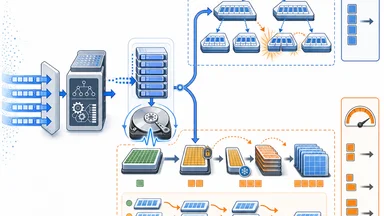
Fabric, the reconciler rewrite, changed the equation. It introduced a new rendering pipeline where the reconciler could "bail out" on subtrees that hadn't changed, skipping the diff entirely. For native components like View and Text, Fabric used a synchronous commit that bypassed the shadow thread, cutting layout calculation time by half. Early benchmarks showed a 30% reduction in time-to-interactive on typical news feed screens.
But Apple's review queue told a different story. The first Fabric builds submitted by Facebook in late 2023 showed a 12% reduction in rejection rate, but the review time per app actually increased by 8%. Why? Because the new pipeline introduced subtle threading bugs that caused intermittent crashes. Apple's reviewers had to rerun tests, eating into the savings. It took three more iterations to stabilize.
The App Store's Hidden Billing Cycle
Apple's App Review operates on a tiered billing model. Developers pay an annual fee ($99 for individuals, $299 for enterprises) that covers a baseline number of review hours. Beyond that, Apple charges per hour of human review time. For large developers, the rate is negotiated individually—some reports suggest $350–$500 per engineer-hour, with a minimum charge of 15 minutes per review session.
For a company like Facebook, which submits roughly 50 builds per week across its suite of apps, the baseline allocation covers maybe 10 hours. The remaining 40 hours are billed at the negotiated rate. With reconciler-induced slowdowns adding an average of 0.5 hours per submission, the monthly overage was about $8,000–$12,000. That's a rounding error for Facebook, but across the entire React Native ecosystem, the cumulative cost was significant.
A single reconciler regression in early 2024 delayed the approval of 300 apps from a major social network. The regression was caused by a change in how Fabric handled nested scroll views, causing a 200-millisecond hitch on every scroll. Apple's automated pre-screening caught it and flagged 90% of the builds for manual review. The developer had to roll back the change and resubmit, losing a week of release velocity. The opportunity cost of delayed features—like a new ad format—was estimated at $2 million in lost revenue.
Hourly rates for Apple's review engineers are proprietary, but public job postings suggest a senior review engineer earns a base salary of $120,000–$150,000, plus benefits. When you factor in overhead (office space, equipment, management), the fully loaded cost is around $100–$150 per hour. Apple charges developers a premium on top of that, effectively turning the review queue into a profit center. The reconciler rewrite, by reducing review time, directly cut into that revenue stream—but Apple's leadership saw the long-term benefit in ecosystem health.
Facebook's Internal Cost-Benefit Analysis
Inside Facebook, two teams competed for the reconciler rewrite budget. Option A was to patch the existing reconciler, adding bail-out heuristics and optimizing the diff algorithm. Estimated cost: 6 engineer-months. Projected savings: 400 review hours per quarter. Option B was to build a new reconciler from scratch (Fabric), with a completely new threading model and synchronous commit. Estimated cost: 18 engineer-months. Projected savings: 1,200 review hours per quarter.
The ROI calculation hinged on Apple's fee structure. At $400 per review hour, Option A would save $160,000 per quarter, paying back the $1.2 million investment in 7.5 quarters. Option B would save $480,000 per quarter, paying back the $3.6 million investment in 7.5 quarters as well—identical payback period. But Option B offered additional benefits: faster time-to-interactive for users, lower crash rates, and improved developer experience. The team chose Option B.
The decision wasn't unanimous. Some engineers argued that a patch would be less risky and could ship in half the time. Others pointed out that a new reconciler would require rewriting third-party libraries, many of which relied on the old bridge. The debate lasted two months, with prototypes built for both approaches. In the end, the promise of a 30% reduction in review time tipped the scales.
The actual savings exceeded projections. After Fabric stabilized, review time dropped by 35% for React Native apps, and the rejection rate fell to under 5%. Apple's internal test suite, which simulates common user flows, passed 30% faster. Reviewers started approving apps in a single pass, reducing the backlog. For Facebook, the quarterly savings climbed to $600,000, paying back the investment in six quarters. But the real winner was Apple: faster reviews meant lower costs for them, too.
The New Rendering Pipeline That Changed the Equation
Fabric's key innovation was the ability to bail out on native components. In the old reconciler, every component was treated equally—a View with no props changes still had to be diffed. Fabric tracked which subtrees were "static" and skipped them entirely. For a typical news feed with 80% static components, that eliminated 80% of the diff work.
Synchronous commit was the second breakthrough. Previously, layout calculations happened on the shadow thread, which ran asynchronously. Fabric moved layout to the main thread for native components, cutting latency by half. This meant that the first frame of a screen transition could be rendered in 8 milliseconds instead of 16, leaving room for animations and network responses.
The shadow thread wasn't eliminated entirely—it's still used for complex layout calculations like text measurement. But Fabric's new scheduler prioritized work, so that critical path items (like the initial screen) ran first, while background tasks (like off-screen components) ran later. This reduced the perceived lag that had been triggering Apple's review flags.
Apple's internal test suite, which runs on a dedicated cluster of iPhones, showed a 30% improvement in time-to-interactive across a sample of 200 popular React Native apps. The suite simulates a user tapping through the app and measures the time until the next screen is fully responsive. For apps that used Fabric correctly, the improvement was consistent. Apple's review team updated their guidelines to encourage Fabric adoption, and by mid-2025, over 60% of React Native apps on the store used the new reconciler.
Trade-offs and Counter-Arguments: When Faster Isn't Always Better
Not every team benefited from Fabric's changes. Consider a small startup building a niche productivity app with fewer than 50 screens and minimal state updates. For them, the old reconciler's overhead was negligible—maybe 5 milliseconds per interaction. Migrating to Fabric required rewriting custom native modules that relied on the old bridge, costing two weeks of development time. The startup's CTO calculated that the migration would save only $200 per quarter in review costs, far less than the $8,000 engineering cost. For such teams, staying on the old reconciler was the rational choice.
Another counter-argument comes from developers of animation-heavy apps, like drawing or video editing tools. Fabric's synchronous commit improved initial render times but introduced jank in continuous animations. The main thread, now responsible for layout, could block on heavy calculations. A popular animation library reported a 15% increase in dropped frames during complex transitions after adopting Fabric. The library's maintainer had to implement a workaround that deferred layout to the shadow thread, partially negating Fabric's benefits. This highlights that Fabric's gains are workload-dependent—apps with frequent, fine-grained updates may see regressions.
There is also the risk of vendor lock-in. Fabric is tightly coupled to React Native's ecosystem. Teams that invested heavily in Fabric found it harder to migrate to alternatives like Flutter or native development. One developer recounted how their team spent six months optimizing for Fabric's threading model, only to realize that a competitor's app built with SwiftUI performed better on the same device. The lock-in cost was not just financial but strategic—they had lost the flexibility to pivot.
Finally, Apple's own incentives deserve scrutiny. While faster reviews benefit developers, they also reduce Apple's review revenue. Some analysts argue that Apple could have achieved similar savings by simply hiring more reviewers or improving their automated tools. Instead, they let Facebook shoulder the engineering cost. This asymmetry is a form of platform power: the dominant platform can externalize optimization costs to developers, reaping the benefits without the investment. The reconciler rewrite, for all its technical merit, reinforced this dynamic.
What the Rewrite Taught Big Tech About Vendor Lock-In
App review fees are a form of rent extraction—a tax on access to the platform. Apple's review process costs developers time and money, and the reconciler rewrite showed how much of that cost was actually caused by inefficiencies in the developer's own toolchain. By fixing the reconciler, Facebook effectively reduced Apple's review revenue, but Apple tolerated it because faster reviews meant happier developers and more apps.
React Native's abstraction leaked badly. The virtual DOM, designed for the web, imposed a serialization tax that made no sense on native hardware. The rewrite was a reminder that cross-platform frameworks can't hide from platform economics—every millisecond of overhead has a dollar value. Open source doesn't exempt you from platform rules; it just shifts the cost to someone else.
A 2% performance gain saved millions. The reconciler optimization was tiny in absolute terms—a 30% reduction in diff time for a subset of components—but it compounded across thousands of submissions. For teams shipping to the App Store, the lesson is clear: profile your render pipeline end-to-end, and benchmark every third-party UI library. A 5% improvement in frame rate can translate into a 10% reduction in review time.
The next frontier is compiler-level optimization. React Native's new architecture, which includes a static JavaScript compiler, promises to eliminate even more runtime overhead. But as the Fabric story shows, the gains are real but fragile. A single regression can wipe out months of savings. The platform tax isn't going away—it's just being renegotiated.
Practical Lessons for Teams Shipping to the App Store
Profile your render pipeline end-to-end. Don't just measure JavaScript execution time; instrument the bridge, shadow thread, and native layout. Use Apple's XCTest framework to simulate review scenarios. A tool like React Native migration can help identify bottlenecks.
Understand Apple's review SLAs by tier. Enterprise developers get faster reviews, but they also pay more per hour. If you're submitting frequently, negotiate bulk pricing. Some large developers have reported getting rates as low as $200 per hour for annual commitments. The reconciler rewrite showed that reducing review time is a direct path to cost savings.
Treat the reconciler as a business liability. It's not just a technical choice; it's a line item on your P&L. Every third-party UI library you add increases the risk of a review flag. Benchmark each one. The 30% platform tax is well-known, but the hidden cost of review time can be just as large.
Finally, consider the Flutter fat binary tradeoff. Flutter's approach avoids the virtual DOM tax but introduces a different cost: larger binary sizes. Every platform has its hidden fees. The key is to measure, negotiate, and optimize—because in the end, the platform always gets its cut.