In 2019, Cockroach Labs announced that CockroachDB would move from the Apache 2.0 license to the Business Source License (BSL). The stated goal was to protect the company's commercial interests against cloud providers offering the database as a service without contributing back. For startups using CockroachDB in production, the announcement triggered an immediate question: what does this mean for our legal budget? The answer, as many discovered, was a significant increase in outside counsel fees, license audits, and internal compliance overhead.
The Hidden Tax of Business Source License
CockroachDB's BSL adoption in 2019 was not an isolated event. Under the BSL, the code is freely available for production use, but with restrictions on how it can be offered as a service. After four years, the code automatically converts to a standard open source license like Apache 2.0 or MIT. This temporal aspect creates a compliance challenge: startups must track when each version of the software was downloaded, how it's being used, and whether their deployment qualifies as a "service" that competes with the vendor.
Startups that had previously relied on permissive licenses suddenly needed legal advice to interpret the BSL's clauses. Typical legal fees for a thorough license review and compliance audit range from $50,000 to $150,000, depending on the complexity of the deployment and the number of affected dependencies. This is not a one-time cost; each new version of the software may introduce changes to the license terms, requiring another round of review.
The uncertainty around compliance audits adds another layer. Unlike traditional proprietary software, where a license is clearly purchased, source-available licenses often lack clear boundaries on what constitutes a violation. A startup might accidentally run afoul of the BSL's production use clause if it offers a managed instance of CockroachDB to customers, even if that is not the primary business. The fear of an audit can lead to overcautious legal spending, with some companies budgeting an extra $20,000–$30,000 annually just for license monitoring.
For a startup with a lean legal team—perhaps a single general counsel or an outside firm on retainer—this hidden tax can double the legal budget. A common reaction is to freeze all new dependencies until the legal team gives the green light, slowing down engineering velocity.
From Permissive to Source-Available: A Pattern Emerges
The BSL is just one example of a broader trend. In 2018, Redis Labs introduced the Commons Clause, which added restrictions to its existing Apache 2.0 license. The move was controversial, and Redis later moved to a dual-license model with the SSPL. Elasticsearch made a similar shift in 2021, abandoning Apache 2.0 for an SSPL and Elastic License dual-license approach. Confluent adopted the Confluent Community License, and MongoDB had already moved to the SSPL in 2018.
Each of these license changes triggers a legal review for any startup that depends on the software. A startup using Elasticsearch for search functionality, for instance, had to evaluate whether its use of the software constituted a "service" that competed with Elastic's offerings. The ambiguity of terms like "competing with the vendor" or "offering the software as a service" requires legal interpretation, often involving outside counsel who specialize in open source licensing.
The pattern is clear: projects that were once safe bets for permissive use are now moving to source-available licenses. This shift is driven by the need for sustainability—vendors want to monetize their work without being undercut by cloud giants. But for startups, the result is a fragmented landscape where each dependency carries a potential compliance cost.
Some in the open source community argue that these licenses are a necessary evolution to prevent the exploitation of volunteer labor. Others counter that they create uncertainty and legal overhead that disproportionately harms smaller companies. The debate remains unresolved, but the practical impact on startup budgets is measurable.
How License Terms Multiply Legal Line Items
Source-available licenses introduce several clauses that require careful legal analysis. The production use clause, common in the BSL, typically allows free use for non-production purposes but charges for production deployments. However, defining "production" can be tricky: does a staging environment that mirrors production count? What about internal tools that support the business?
Cloud service restriction wording is another area of ambiguity. The SSPL, used by MongoDB, explicitly targets companies that offer the software as a service. But what about a startup that provides a platform on which customers can run MongoDB themselves? The line between offering a service and enabling a service is blurry, and legal teams often need to issue opinions that cost thousands of dollars per interpretation.
Competing with vendor loopholes add further complexity. The BSL often includes a clause that restricts use if the user competes with the licensor. For a startup that might pivot into a related space, this creates a potential future liability. Outside counsel billable hours spike as lawyers draft memos analyzing whether the startup's business model could be seen as competitive.
Finally, GPL compatibility analysis is often required when mixing source-available code with GPL-licensed dependencies. The SSPL is intentionally not GPL-compatible, meaning that combining it with GPL code can create a licensing conflict. Resolving these conflicts can require rewriting integration code or switching to alternative libraries, both of which have engineering and legal costs.
Beyond these clauses, there is the issue of version tracking. Many source-available licenses apply to specific versions, so a startup must know exactly which version of each dependency it uses. This requires meticulous dependency management, often necessitating a dedicated tool or manual inventory. For a startup with dozens or hundreds of dependencies, the overhead can be substantial.
The Engineer's Dilemma: Productivity vs. Compliance
For developers, the shift to source-available licenses introduces friction in the daily workflow. Many engineers are unfamiliar with the nuances of the SSPL or BSL; they may assume that because code is available on GitHub, it is freely usable. This assumption can lead to accidental violations, especially when dependencies are pulled in transitively.
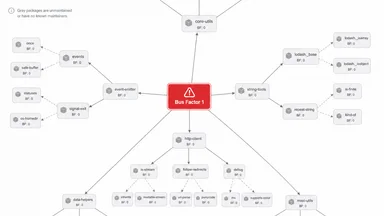
Dependency scanning tools like Snyk and FOSSA can help identify license types, but they are not perfect. A common gap is that these tools often flag the license of the direct dependency but miss the licenses of transitive dependencies. A startup using a library that includes CockroachDB as a transitive dependency might not realize it is bound by the BSL until a legal review is triggered.
Internal audits, which are often required to ensure compliance, can slow down feature work. A team might need to pause development for a week while the legal team reviews a new dependency. Some startups have responded by creating an allowlist of pre-approved licenses, but maintaining that list requires ongoing effort.
As a result, some engineering teams have started switching to AGPL alternatives when possible. The AGPL is a well-understood license with a long history, and while it has its own restrictions, it avoids the ambiguity of newer source-available licenses. However, the AGPL carries a stigma that can be a barrier to adoption in enterprise environments.
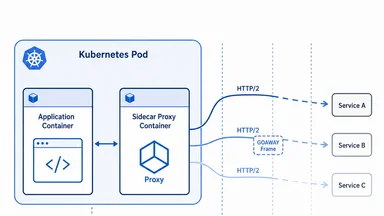
Another common workaround is to containerize dependencies so that the license implications are isolated. For example, a startup might run a BSL-licensed database in a separate container with a well-defined API boundary. This reduces the surface area for license analysis, but adds operational complexity and may not eliminate all legal risks.
Calculating the Real Cost: Two Case Studies
To understand the financial impact, consider two hypothetical but representative case studies based on industry reports. Startup A, a mid-stage company using CockroachDB for its core database, spent roughly $80,000 on legal analysis when the BSL was adopted. This included a full license review, an audit of their deployment architecture, and ongoing monitoring for version updates. The legal team also had to negotiate a commercial license with Cockroach Labs for production use, adding another $20,000 in legal fees.
Startup B, a smaller company that relied on Elasticsearch for search, faced a different challenge. They used Elasticsearch as a dependency in three separate products, each requiring a separate license analysis. The total cost came to about $20,000 per dependency, or $60,000 overall. In both cases, the legal budget for the year doubled, and the companies had to deprioritize other legal work, such as patent filings or contract negotiations.
Hashicorp's migration to the BSL in 2023 for its core products like Terraform and Vault created a similar wave of compliance work for its users. Some estimates from license compliance firms suggest that a typical startup spends between $30,000 and $200,000 per license shift, depending on the number of dependencies and the complexity of the deployment. These figures are hedged because actual costs vary widely, but the pattern is consistent: source-available licenses introduce a significant and often unexpected legal expense.
Empirical data from license compliance firms indicates that the number of legal inquiries related to source-available licenses has increased by roughly 40% year-over-year since 2020. This trend suggests that the problem is not going away, and startups need to plan for it.
To put these numbers in perspective, consider a startup with a total legal budget of $100,000 per year. A single license shift could consume the entire budget, leaving no room for other legal needs like contract reviews or intellectual property protection. Alternatively, a startup might need to increase its legal budget by 50% to accommodate ongoing compliance, which can strain cash flow.
Practical Moves to Cut the Legal Overhead
Startups can take several steps to reduce the legal burden. One approach is to adopt an open-core model with clear boundaries between the open source core and proprietary features. By limiting the use of source-available dependencies to non-core components, the risk is contained. For example, a startup might use a permissively licensed database for its core product and only use BSL-licensed tools for ancillary services.
Using SPDX identifiers in CI/CD pipelines can automate license detection and flag potential issues early. By integrating tools like FOSSA or Snyk into the build process, developers get immediate feedback on license compatibility. This reduces the need for manual legal reviews and lowers the risk of accidental violations.
Pre-approving a license allowlist is another effective strategy. The legal team can define a set of licenses that are acceptable without further review, such as MIT, Apache 2.0, and BSD. Any dependency that falls outside this list triggers a review. This approach streamlines the process and gives developers clear guidelines.
Negotiating retroactive grandfathering with vendors can also help. Some companies, like Cockroach Labs, have offered existing users the option to remain on the permissive license for a limited time. Startups should proactively reach out to vendors and ask for this option before the license change takes effect.
Finally, monitoring services like FOSSA or Snyk can send alerts when a dependency's license changes. This allows the legal team to react quickly rather than discovering the change months later during an audit.
Another practical move is to conduct a periodic license audit internally, perhaps quarterly, to catch any new dependencies that may have been added without review. This avoids the surprise of a major compliance issue during a funding round or acquisition due diligence.
When Source-Available Licenses Make Sense
Despite the costs, source-available licenses are not always a bad choice for startups. Late-stage startups with significant VC runway may find that the protection offered by the BSL or SSPL outweighs the legal overhead. For a company that is building a product with low switching cost—meaning customers can easily migrate away—a source-available license can prevent a competitor from offering a free alternative.
Some startups also choose source-available licenses to avoid the stigma of the AGPL, which is often seen as more restrictive. The AGPL's requirement to distribute source code to network users can be a deal-breaker for enterprise sales. Source-available licenses offer a middle ground that is more palatable to corporate legal teams.
Short-term protection before an IPO is another common use case. A startup that plans to go public may want to lock down its code for a few years to maximize valuation. After the IPO, the code can convert to a permissive license, by which time the company's market position is established.
However, the trade-off between community goodwill and legal spend is real. Each license change can alienate developers who contributed to the project under the assumption of permissive licensing. Some projects have seen forks or reduced contributions after switching. For startups that rely on community contributions, this can be a significant cost that is harder to quantify than legal fees.
In the end, no single approach works for everyone. The key is to understand the total cost of ownership for each dependency, including the legal overhead. By planning ahead and using the practical moves outlined above, startups can avoid the surprise of a doubled legal budget and keep their engineering teams focused on building products.
As the landscape continues to evolve, staying informed about license changes and maintaining a proactive compliance posture will be essential for any startup that depends on open source software.